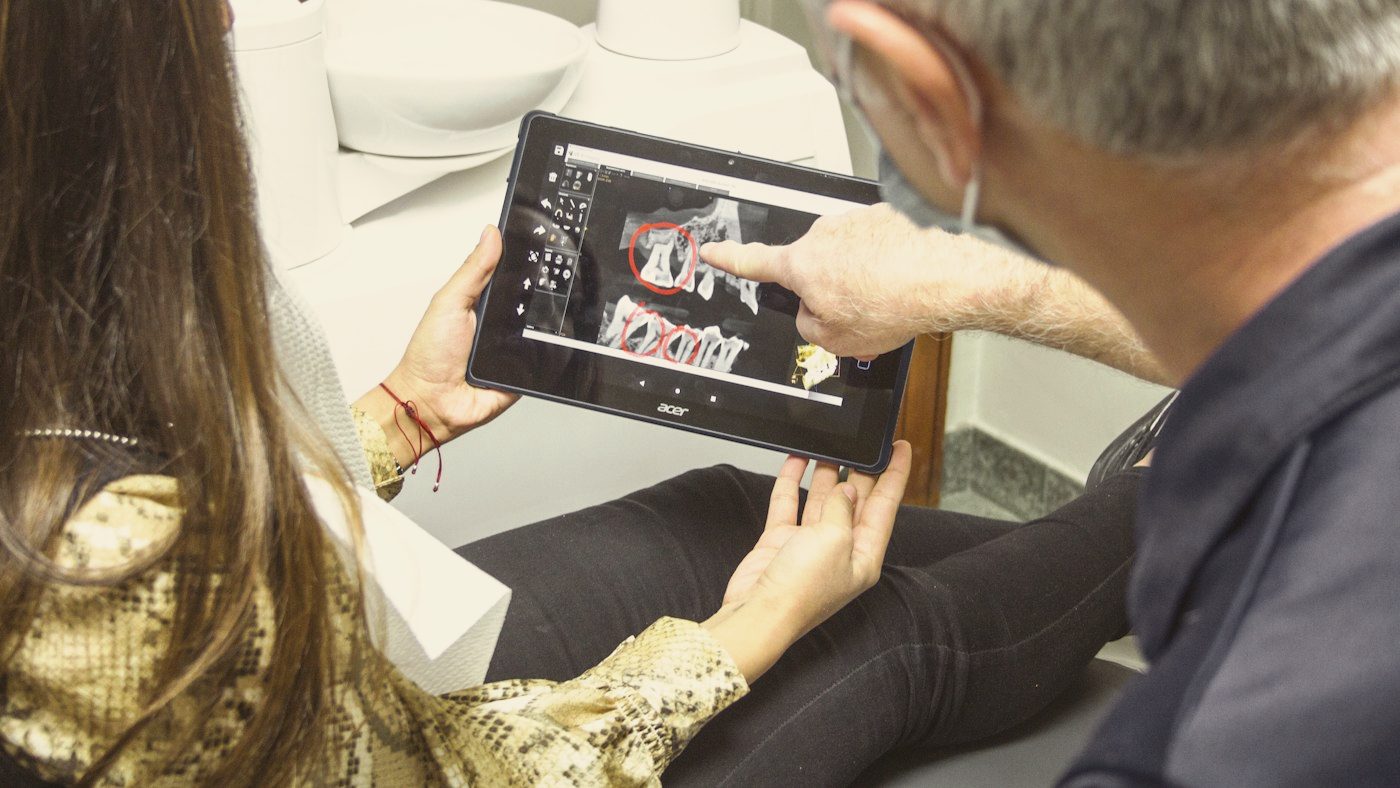
Most people do not go looking for a periodontist. They go looking because their gums bleed, or a dentist said "root canal" and then said they would be sending you to someone else.
That is honestly the best way to think about specialists. Start from the problem that sent you looking. The title on the door comes second. This page maps the common problems to the kind of practice that usually handles them, and it explains what a referral actually means.
start with a general dentist
A general dentist handles most of what brings people into a dental office: checkups, cleanings, fillings, crowns, a lot of extractions, and plenty of root canals too.
They are also the ones who decide when something is outside their scope. A referral usually means they are being careful about where their skills stop. It does not mean your case has gone badly.
If you do not have a dentist yet, that is the first appointment to book. You can match with a general dentist by how you want to be treated, then let them tell you whether you need anyone else.
there are twelve recognized specialties
The National Commission on Recognition of Dental Specialties and Certifying Boards, which is linked to the ADA, recognizes twelve. Most patients will only ever meet five or six. The rest, like dental public health or oral and maxillofacial radiology, mostly work behind the scenes.
One thing that surprises people: cosmetic dentistry is not on that list of twelve. Neither is implant dentistry. Plenty of dentists do great work in both. When someone calls themselves a cosmetic or implant "specialist," that is a marketing word. It is not one of the recognized credentials. We wrote up how to judge a dentist for cosmetic work for exactly that reason.
the map: what sent you looking, and who usually handles it
gums: a periodontist
The Commission's definition of periodontics covers diseases of the tissues that support and surround the teeth. In plain terms, the gums and the bone underneath them.
People usually meet one after a general dentist mentions gum disease, deep pockets, recession, or a graft. If that is where you are, our pieces on gum recession and grafting and gum disease stages translate the vocabulary. You can explore periodontists here.
inside the tooth: an endodontist
Endodontics is about the dental pulp, the soft tissue inside the tooth. A root canal is the procedure most people know.
Plenty of general dentists do root canals themselves. A referral usually means the tooth is one they would rather hand to someone who does nothing else. What to expect from a root canal walks through the appointment, and you can explore endodontists.
replacing or rebuilding teeth: a prosthodontist
The Commission defines prosthodontics around rehabilitating and maintaining function for patients with missing or deficient teeth. That covers crowns, bridges, dentures, and the teeth that go on top of implants.
A single crown is usually done by your general dentist. People tend to meet a prosthodontist when the plan involves a lot of teeth at once, or a full rebuild. Our explainers on dental implants and dentures versus implants cover the options. Explore prosthodontists.
surgery in the mouth or jaw: an oral and maxillofacial surgeon
This specialty covers surgical treatment of diseases, injuries and defects in the mouth, jaw and face. Complicated extractions, wisdom teeth, implant placement and jaw surgery are where most patients meet one.
If your question is about wisdom teeth, start with when wisdom teeth come out. Explore oral surgeons.
straightening: an orthodontist
Orthodontics covers bite and alignment, which the Commission describes as the diagnosis, prevention, interception and correction of malocclusion. Braces and clear aligners both live here.
Some general dentists offer aligners too, so ask who will actually plan and monitor the case. Invisalign versus braces covers the tradeoffs, and you can explore orthodontists.
kids: a pediatric dentist
Pediatric dentists care for infants, children and teenagers. Plenty of family practices are great with kids. Parents often go pediatric for very young children or kids who get anxious in the chair. What makes a good pediatric dentist covers how to tell, and you can explore pediatric dentists.
jaw pain and clicking
Orofacial pain is its own recognized specialty, covering pain disorders of the jaw, mouth, face, head and neck. Most people still start with their general dentist here, who may refer on. Our TMJ explainer covers what the terms mean.
if something hurts, skip the map
Pain, swelling, a knocked-out or broken tooth, or a fever with a sore mouth are not a research project. Call a dental practice today. If the swelling is spreading, it is hard to swallow or breathe, or there is a lot of bleeding, go to emergency care. Our dental emergency guide covers who to call. None of this page is a reason to wait.
questions to ask when you get a referral
A referral comes with a name and not much else. These four questions fill in the rest:
- What exactly are you sending me there for, in one sentence?
- Why this person and not you?
- Will you get their notes, and who handles my follow-up afterward?
- Is this specialist in my network, and does my plan want a referral on file?
If the answer to the first one is vague, ask again. It is your referral and you should understand it. If you want someone else to look at the plan before you commit, here is when a second opinion makes sense.
picking the specialist, not just the specialty
Two periodontists can practice very differently. The title tells you what they are trained in. It does not tell you whether they explain things or whether you will feel rushed.
Dentalist predicts how a practice is likely to feel across 13 dimensions using verified signals: provider credentials, specialties, services, hours and Google rating patterns. It does not read patient review text. That is enough to narrow a referral list down to the ones that fit how you want to be treated. See how matching works, or start matching.
sources
related
Take the next step
Find your match for this
Take the quick personality quiz and let AI matching surface practices that fit your situation, predicted from verified signals like insurance, location, and what you want to fix.
Go deeper on this topic
Costs, treatment options, and specialists related to this guide, with AI matching built in.
Root Canal cost guide
What root canal costs nationally, and what moves the price.
TreatmentEndodontics (Root Canals)
Root canal therapy and pain you'd rather not Google.
SpecialistsEndodontists
Endodontists treat tooth nerve pain and infections, performing root canals and saving severely damaged teeth.
Cost guideDeep Cleaning cost guide
What deep cleaning costs nationally, and what moves the price.
frequently asked questions
- Do I need a specialist or a general dentist?
- Start with a general dentist unless you already have a referral. They handle most of what people walk in with, and they are the ones who decide when something is outside their scope and send you on. Showing up at a specialist first usually just means a second visit later.
- How many dental specialties are there?
- Twelve, according to the National Commission on Recognition of Dental Specialties and Certifying Boards, the body linked to the ADA that recognizes them. Most patients only ever meet five or six of them: periodontics, endodontics, prosthodontics, oral and maxillofacial surgery, orthodontics, and pediatric dentistry.
- Is a cosmetic dentist a specialist?
- No. Cosmetic dentistry is not one of the twelve recognized specialties. Plenty of general dentists do excellent cosmetic work, so judge them on their cases and how they explain the plan, not on the title.
- What is the difference between a periodontist and an endodontist?
- A periodontist works on the gums and bone that hold the tooth in place. An endodontist works inside the tooth, on the pulp. Gum problems tend to go to the first, root canals to the second.
- Will insurance cover a visit to a specialist?
- Plans vary, and some want a referral on file before they pay anything. Call your carrier before the appointment, ask whether the specialist is in network, and ask whether a referral is required.
Keep exploring
More guides to help you find the right practice fit.
Questions to Ask a New Dental Practice Before Your First Visit
6 min read
General HealthHow to Compare Two Dental Practices Side by Side
6 min read
General HealthThe 13 Things AI Can Predict About a Dental Practice (Before You Walk In)
8 min read
AnxietyDental Anxiety: How to Find a Practice That Handles It Well
7 min read