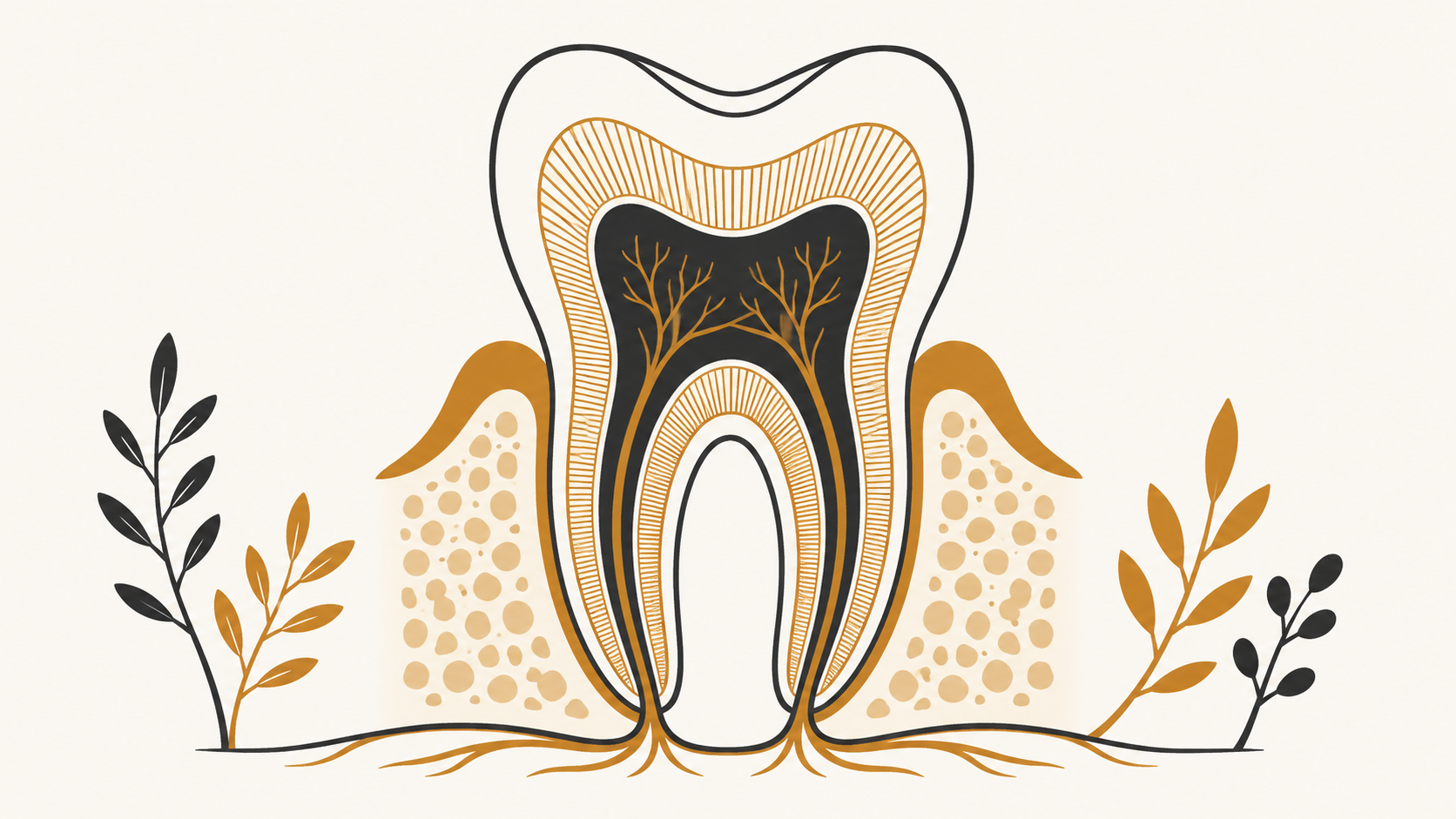
Most people walk into a root canal expecting the worst appointment of their lives, and most people walk out surprised. Modern endodontic treatment is closer to a long filling than the punchline it used to be. Here is what actually happens, why your dentist recommends it, and how to make the visit go smoothly.
Why a root canal is recommended
Inside every tooth is a soft core called the pulp — nerves, blood vessels, and connective tissue. When decay reaches the pulp, or a crack lets bacteria in, the pulp gets inflamed or infected. Common signals include lingering pain after hot or cold drinks, pain when biting, a pimple on the gum, or a tooth that has gone dark. Without treatment, the infection spreads into the bone and can lead to a tooth abscess.
A root canal removes the infected pulp, cleans and shapes the canal inside the root, and seals it. The tooth stays in place. The alternative is extraction, which is faster but means losing the tooth and usually replacing it with an implant or bridge — a longer and more expensive road overall.
The appointment, step by step
Plan on roughly 60 to 90 minutes for a single-rooted tooth and up to two hours for a molar with multiple canals. Some cases are split across two visits.
Step 1: Numbing
Your dentist or endodontist applies a topical numbing gel and then injects local anesthetic. You should feel pressure during the procedure, never sharp pain. Speak up if you feel anything beyond pressure — they can add more anesthetic.
Step 2: Isolating the tooth
A small rubber sheet called a dental dam is clamped around the tooth. It keeps the tooth dry and stops debris from going down your throat. It is the single biggest reason modern root canals feel less unpleasant than they used to.
Step 3: Accessing the pulp
A small opening is made through the top of the tooth so the dentist can reach the canals. You hear the drill, but you should not feel pain.
Step 4: Cleaning and shaping
Tiny flexible files are used to remove the infected pulp and shape each canal. The canals are flushed with antibacterial solution between passes. This is the longest part of the visit.
Step 5: Filling and sealing
The canals are filled with a rubber-like material called gutta-percha and sealed with cement. A temporary filling closes the access hole until your permanent restoration is placed.
Step 6: The crown
Most treated teeth need a crown placed within a few weeks. The cleaning and shaping step makes the tooth more brittle, and a crown protects it from cracking. Skipping this step is the most common reason a root-canaled tooth fails.
How to prepare
- Eat a normal meal beforehand. The numbing wears off slowly, and you do not want to eat with a numb cheek for the next three hours.
- Take ibuprofen 30 to 60 minutes before the appointment if your dentist approves. Pre-medicating reduces post-op soreness.
- Bring headphones. Two hours of dental chair audio is easier with a podcast or playlist.
- Arrange a quiet afternoon. You can drive yourself home, but you will probably not want to head back to the office.
After the appointment
The tooth and surrounding gum will feel tender for two to four days. Over-the-counter ibuprofen handles most discomfort. Stick to soft food on that side for a day, and avoid biting hard things on the temporary filling — it is not as durable as the eventual crown.
Call your dentist if you notice swelling that gets worse instead of better, sharp pain that returns after the first 48 hours, or the temporary filling falls out.
What it usually costs
Without insurance, a front-tooth root canal typically runs $700 to $1,200 and a molar runs $1,200 to $1,800. The crown is a separate charge of roughly $1,000 to $1,500. Most dental insurance covers a portion of both, and many practices offer in-house payment plans. Ask for an itemized treatment estimate before scheduling so there are no surprises.
A good endodontist makes a root canal feel routine. If your general dentist refers you out for a complicated case, that is a good sign — they want a specialist on a tooth they want to save.
Take the next step
Find your match for this
Take the quick personality quiz and let AI matching surface practices that fit your situation, predicted from verified signals like insurance, location, and what you want to fix.
Go deeper on this topic
Costs, treatment options, and specialists related to this guide, with AI matching built in.
Root Canal cost guide
What root canal costs nationally, and what moves the price.
TreatmentEndodontics (Root Canals)
Root canal therapy and pain you'd rather not Google.
SpecialistsEndodontists
Endodontists treat tooth nerve pain and infections, performing root canals and saving severely damaged teeth.
InsuranceDelta Dental dental coverage
Practices that take Delta Dental, matched to how you want care to feel.
frequently asked questions
- How long does a root canal take?
- Plan on 60 to 90 minutes for a single-rooted tooth and up to two hours for a molar with multiple canals. Some cases are split across two visits.
- Does a root canal hurt?
- You should feel pressure, never sharp pain. A topical gel and local anesthetic go in first, and if you feel anything beyond pressure, say so and more can be added. Afterwards the tooth and gum stay tender for two to four days, which ibuprofen usually handles.
- Do I really need a crown after a root canal?
- In most cases yes, within a few weeks. Cleaning and shaping the canals leaves the tooth more brittle, and skipping the crown is the most common reason a treated tooth later fails.
- What does a root canal cost without insurance?
- Roughly $700 to $1,200 for a front tooth and $1,200 to $1,800 for a molar, with the crown a separate $1,000 to $1,500. Ask for an itemized treatment estimate before you schedule.
Keep exploring
More guides to help you find the right practice fit.
Deep Cleaning (Scaling and Root Planing): What to Expect and What It Costs
7 min read
ProceduresGetting a Cavity Filled: What to Expect Before, During, and After
6 min read
AnxietyPreparing for a Root Canal: What Nobody Tells You
6 min read
ProceduresDo I Need a Deep Cleaning? What Scaling and Root Planing Actually Means
7 min read