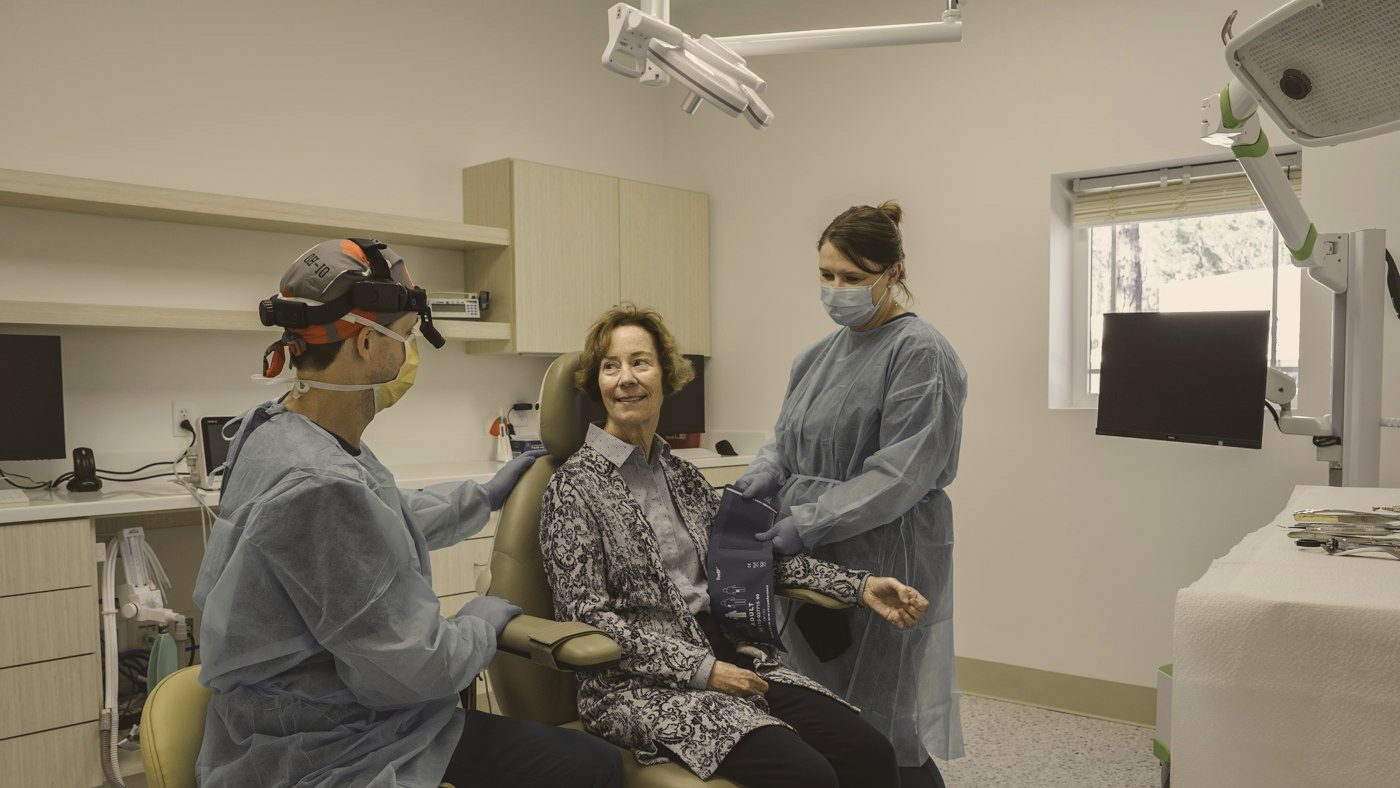
You're lying back, the hygienist wraps a square of gauze around your tongue, pulls it gently to one side, then the other. Then fingers along your jaw and down your neck. Nobody says what it's for, and it's over before you think to ask.
That's the oral cancer screening. Most people have had one many times and never knew the name.
what they're actually doing
It's a look and a feel. The USPSTF describes the method as a systematic clinical exam, meaning inspection and palpation of the mouth. No machine. No blood draw.
NIDCR says your dentist or hygienist checks your face, neck, lips, entire mouth and the back of the throat. The ADA gets more specific: the lips, the lining of your cheeks, your gums, the front and back of your tongue, the floor and roof of your mouth, your throat, your tonsils, and the spot where your tongue meets the bottom of your mouth. Then they check your jaw and neck for lumps.
The gauze is a grip. A tongue is slippery, and the sides and underneath are hard to see any other way.
Before any of that, the ADA says your dentist will ask whether your medical history has changed and whether you've noticed anything new or unusual. That question is part of the screening too. Answer it properly.
does it hurt, and how long does it take
NIDCR calls it painless and says it takes only a few minutes. Most of the time you won't notice where the cleaning stops and the screening starts.
is it part of every checkup
It usually rides along with one. NIDCR calls a regular dental checkup an excellent opportunity to have the exam, which is the whole reason it happens there.
If you honestly can't tell whether yours included it, ask. "Did you do the oral cancer check today?" takes two seconds to answer. Ask the office too if you want to know whether it's part of the exam fee or billed on its own, and check with your plan, since coverage varies.
why there's no official "how often"
This part surprises people. There's no national screening schedule for adults who don't have symptoms.
The American Cancer Society says that in the US, doctors don't recommend routine screening for these cancers. The US Preventive Services Task Force looked at the evidence in 2013 and called it insufficient to weigh the benefits and harms of screening adults with no symptoms. Its 2023 literature check found nothing new enough to change that.
Here's the catch people miss. A missing schedule is a statement about the research, and it says nothing about skipping the look you already get. It takes a few minutes at a visit you're already sitting through. How often your dentist looks is a good question for them, especially if you use tobacco or drink regularly, which ACS names as reasons a provider may suggest checking your own mouth monthly with a mirror.
what they might use besides their eyes and hands
Sometimes more than a look. ACS describes a few methods some providers use to find abnormal areas, mostly for higher-risk patients: a blue dye that highlights suspicious tissue, a fluorescent light, and a brush biopsy that collects cells from a spot in question.
ACS is also plain that there's no simple exam or blood test that finds these cancers early. So if a practice pitches one of these add-ons, ask what it would change about your care and what it costs. You're allowed to ask why.
what a referral means
It means they want a better look. That's all it means on the day.
NIDCR says that if the dentist finds anything unusual, they'll recommend more tests or refer you to a specialist. The ADA says a warning sign your dentist notices may not mean you have oral cancer, and that sometimes the next step is a follow-up exam a week or two later to see whether a spot cleared up on its own.
The one thing not to do is let the follow-up slide. Book it before you leave, and ask who you're being sent to and what they'll do.
when not to wait for your next checkup
NIDCR names signs worth getting looked at if they last more than two weeks. A sore, lump or thick patch in your mouth, lip or throat. A white or red patch. A sore throat or hoarseness that won't quit. A lump in your neck. Trouble chewing, swallowing or speaking, or moving your jaw or tongue. Swelling that changes how dentures fit. Numbness in your tongue or mouth. Ear pain.
That's not a checklist to diagnose yourself with. It's a reason to call a dentist now instead of waiting six months. Pain, bleeding or swelling is a call today. Having something looked at is never the wrong move.
how to pick a practice for this
The screening itself is simple. The part that varies from office to office is whether anyone tells you it happened, and what they saw.
Communication matters most here. A dentist who says "I checked your tongue, cheeks and neck and everything looked normal" is giving you something. One who just moves on isn't.
Follow-up care matters if anything gets flagged. Ask how they track a spot they want to watch and who calls whom.
Value and cost come in if extra tests get offered. A practice that explains the price before the test is worth more than one that explains it on the bill.
Dentalist predicts these dimensions from verified signals, including provider credentials, the service mix, hours and Google rating patterns. It doesn't read or analyze patient review text to build the scores. So you're filtering on how a practice is built to run. Its own marketing doesn't enter into it.
four questions for your next checkup
- Did today's exam include the oral cancer check, and what did you look at?
- Is there anything you're keeping an eye on from last time?
- Would you suggest a different interval for me, and why?
- If you ever flag something, what happens next and who do I call?
sources
- NIDCR: Oral Cancer
- American Dental Association (MouthHealthy): Oral Cancer
- American Cancer Society: Can Oral Cavity and Oropharyngeal Cancers Be Found Early?
- US Preventive Services Task Force: Oral Cancer Screening
related
Take the next step
Find your match for this
Take the quick personality quiz and let AI matching surface practices that fit your situation, predicted from verified signals like insurance, location, and what you want to fix.
Go deeper on this topic
Costs, treatment options, and specialists related to this guide, with AI matching built in.
U.S. Dental Access Report 2026
State-by-state data on where dental care is easy to reach, and where it isn't.
TreatmentGeneral Dentistry
Your everyday cleanings, checkups, and core dental care.
SpecialistsGeneral Dentists
General dentists handle preventive care, cleanings, fillings, and routine oral health for the whole family.
frequently asked questions
- What happens during an oral cancer screening at the dentist?
- Your dentist or hygienist looks at and feels the tissue in and around your mouth. NIDCR says they check your face, neck, lips, entire mouth and the back of the throat. The ADA adds the tongue front and back, the floor and roof of the mouth, the tonsils, and your jaw and neck for lumps.
- Does an oral cancer screening hurt?
- No. NIDCR calls the exam painless and says it takes only a few minutes. The odd part is the gauze on your tongue, which is just there to get a grip so they can see the sides and underneath.
- Is oral cancer screening part of a regular checkup?
- It usually happens during one. NIDCR calls your regular dental checkup an excellent opportunity to have the exam. If you can't tell whether yours included it, ask. It's a fair question and a quick answer.
- How often should I get screened for oral cancer?
- There's no national schedule for people without symptoms. The American Cancer Society says US doctors don't recommend routine screening, and the USPSTF found the evidence insufficient to weigh benefits and harms. Your dentist can tell you what makes sense for you and how often they look.
- What does it mean if my dentist refers me after a screening?
- It means they want a closer look. It isn't a diagnosis. NIDCR says a dentist who finds anything unusual will recommend more tests or refer you to a specialist. The ADA notes a warning sign may not mean cancer, and a follow-up exam a week or two later is sometimes how it gets checked. Book the follow-up rather than waiting on it.
Keep exploring
More guides to help you find the right practice fit.
How to Switch Dentists (and Take Your Records With You)
6 min read
General HealthDry Mouth (Xerostomia): Causes, Risks, and Finding the Right Dentist
6 min read
General HealthHow to Find a Dentist Whose Communication Style Actually Works for You
7 min read
General HealthWhat Makes a Dentist the Right Fit? The 6 Things That Actually Predict It
6 min read